
Find someone without knowing their policy
If the person is saved in Directory, open Directory → People to find their contact record. If your program records insured people as exposures, open Exposures to find the insured record instead. On a list configured with a Name filter that supports Contains:- Select Add Filters, then Name.
- Select Contains and enter part of the name, such as
Campbell. - Select Apply to see matching records.
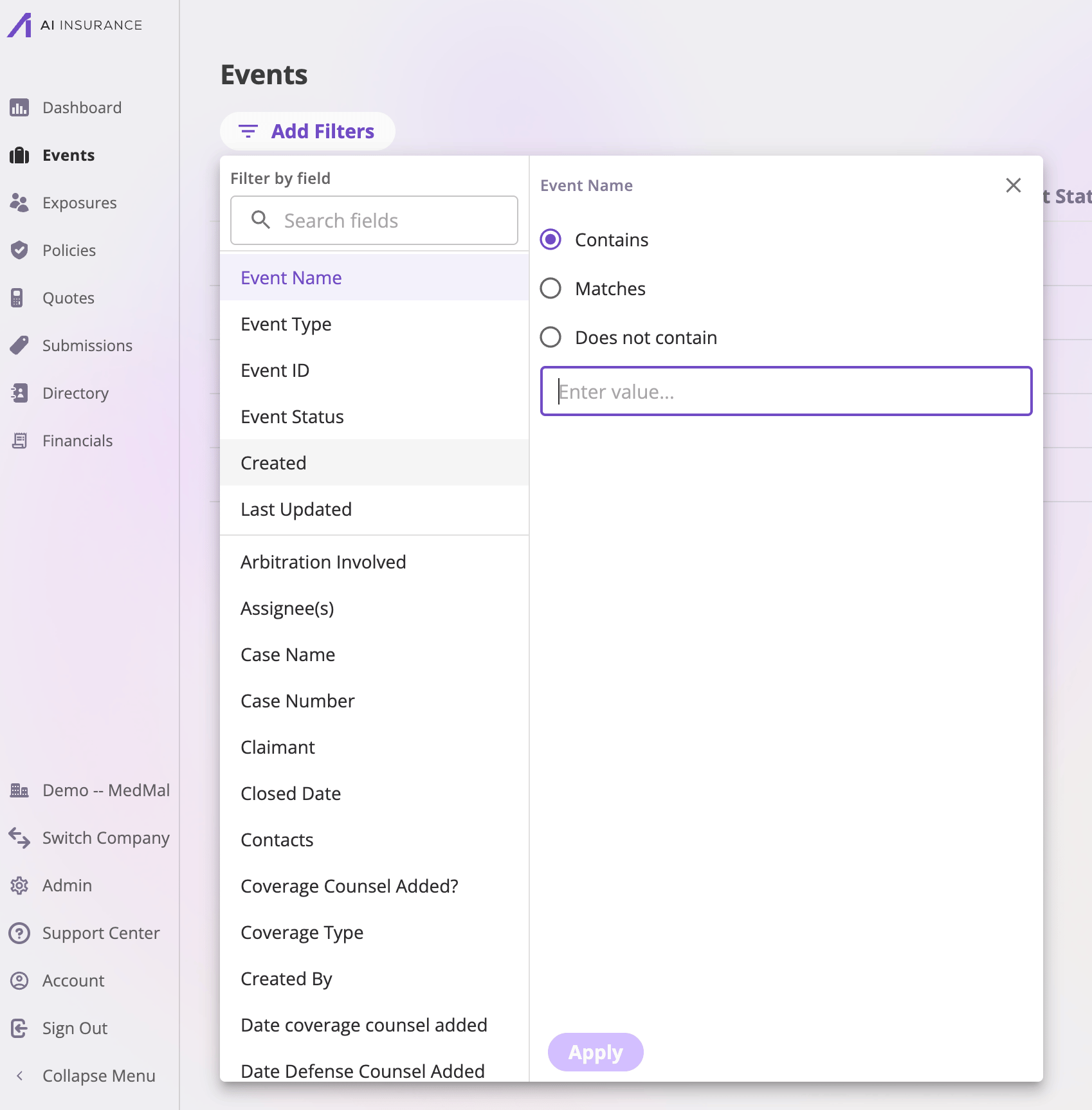
An example filter picker on Events. Event Name supports Contains, Matches, and Does not contain.
A field or column does not automatically become a filter
These are separate configuration choices:
You can display a Name column without offering a Name filter. You can also
offer a filter for a calculated value without displaying that value as a
column.
Filters are configured separately for Events, Exposures, Quotes, Submissions,
People, Organizations, and Policies. Adding Name to People does not add it to
Exposures. The app also provides built-in filters, such as creation dates, on
the lists that support them.
If the filter you need is missing
The Search fields box inside Add Filters searches the names of available filters. It does not search record values. If Name is missing, typing a person’s name into that box will not find their record, and adding a Name column will not create the missing filter. Ask your AI Insurance team to add the filter to the relevant list, or configure it yourself if you manage your company’s configuration. If Name exists but Contains is missing, the filter’s configured conditions need to include Contains. Some other areas of the app have their own search boxes. This guide describes the configured filters on entity lists.Include record lookups in your instance setup
Give the person or AI assistant configuring your instance examples of what staff need to find. For example:- “Find an insured exposure using only part of their name.”
- “Find a location using part of its address.”
- “Find a quote or policy using its reference number.”
- “Find policies ending within a date range.”